Showing posts with label #Africa in Diaspora. Show all posts

Monday, February 27, 2012

It's Morocco's Economy, Stupid

Greetings and salutations to those of you out there in Africana Studies 221 land! Today's post concerns the country's current economic situation, both domestically and in relation to global markets. All info comes from, as usual, the thoughtful and well-read people who compile the CIA's World Factbook entry for Morocco.

Up until the recent developments of Arab Spring in 2011, Morocco's economy has been sound for many years. Its proximity to Europe makes an economic relationship between the two areas convenient and profitable. This coupled with low labor costs create an economy that is diverse, open, and largely market-oriented. Now, keep in mind I have yet to take an economics course (gotta love Hamilton's open curriculum), but from what I understand, this means that the Moroccan economy has many different aspects to it and is mostly based on supply and demand (Okay, okay, I got some help from the Wikipedia entry for "Market economy"...).

A Moroccan farmer
The economy since King Mohammed VI took the throne in 1999 has for the most part been stable. Different sectors like agriculture, tourism, phosphates, textiles, apparels, and subcomponents all are key parts of Morocco's economy. In the past decade or so, Morocco has enjoyed steady growth, low inflation, and decreased government debt. Nearly half of the population works in the agriculture industry.

With that said, one might conclude that the people of Morocco must therefore live comfortably. This is not the case, as the country has high rates of unemployment and poverty. The unemployment rate is currently 9% and 15% of the population lives below the poverty line. This makes me wonder: who benefits from the economy? What are some policies the new democratic republic government can make in order to create more jobs? Other current challenges that Morocco's economy faces include corruption, increased government spending, and socioeconomic disparities among the Moroccan people. Hopefully under the new constitution, the democratic-republic government can address some of these concerns.


Friday, February 17, 2012

Morocco's Government

TGIF, everyone! And you know what Friday means -- blog post day! The main focus of this post will be Morocco's government. Both the country's general structure of government and its current political situation of are interest to me, especially as this coming Monday (Feb. 20) marks the one year anniversary of the Moroccan pro-democracy movement. Once again, all info comes from the CIA World Factbook entry on Morocco, unless otherwise noted. 

Prime Minister Abdelilah Benkirane
As I mentioned last week, Morocco is a constitutional monarchy. This means that the country has a monarch (in Morocco's case, a king) who rules within the parameters of a written constitution. The government approved a new constitution in July 2011. The current king is King Mohammed VI, but Morocco also has a prime minister who is the head of government, whose name is Abdelilah Benkirane. 

Morocco's legislative branch consists of a bicameral Parliament, which consists of the Chamber of Counselors, and the Chamber of Representatives. Whereas in the United States there are only two main political parties, the Democrats and the Republicans, in Morocco there are dozens of political parties with different agendas.   


King Mohammed VI
Although the protests of last February and March did lead to change, many Moroccans are still not satisfied with the results and want more reform. Most of their concern relates to the power of the government: does it actually have any weight, or is it merely a puppet of Mohammed VI's monarchy? According to a Washington Post article, protesters call the recent reforms "cosmetic" and do not find them substantive. The country still faces many economic and social challenges that the government has yet to resolve. It remains to be seen how the protests of Arab Spring in Morocco will shape the government; as of now, there's still a long way to go.


Thursday, February 9, 2012

Morocco: Some History

In this post I'm going to provide a brief overview of Morocco's illustrious history while also exploring the current state of the country and its people. All info comes from the wonderful people over in the CIA who put together the World Factbook. Thanks, CIA! 

Moroccan Muslim dynasties began ruling the  area we currently know as Morocco in 788, about a century after the Arab conquest in North Africa. Morocco enjoyed a golden age in the late 1500s and 1600s thanks to Ahmad Al-Mansur, head of the Sa'adi monarchy, who protected the country from foreign invaders. The current royal family of Morocco belongs to the Alaouite dynasty, which dates back to the 1600s.


The 19th and 20th centuries brought forth much change for this little country in the northwest corner of Africa. In 1860, Spain occupied the northern part of Morocco, and Moroccan sovereignty began to weaken. Consequently, in 1912, France established a protectorate over the country, which eventually ended in 1956. The Kingdom of Morocco is currently ruled by King Mohammed VI, who acceded the throne in 1999. Mohammed VI's grandfather, Mohammed V, organized Morocco into a constitutional monarchy. 

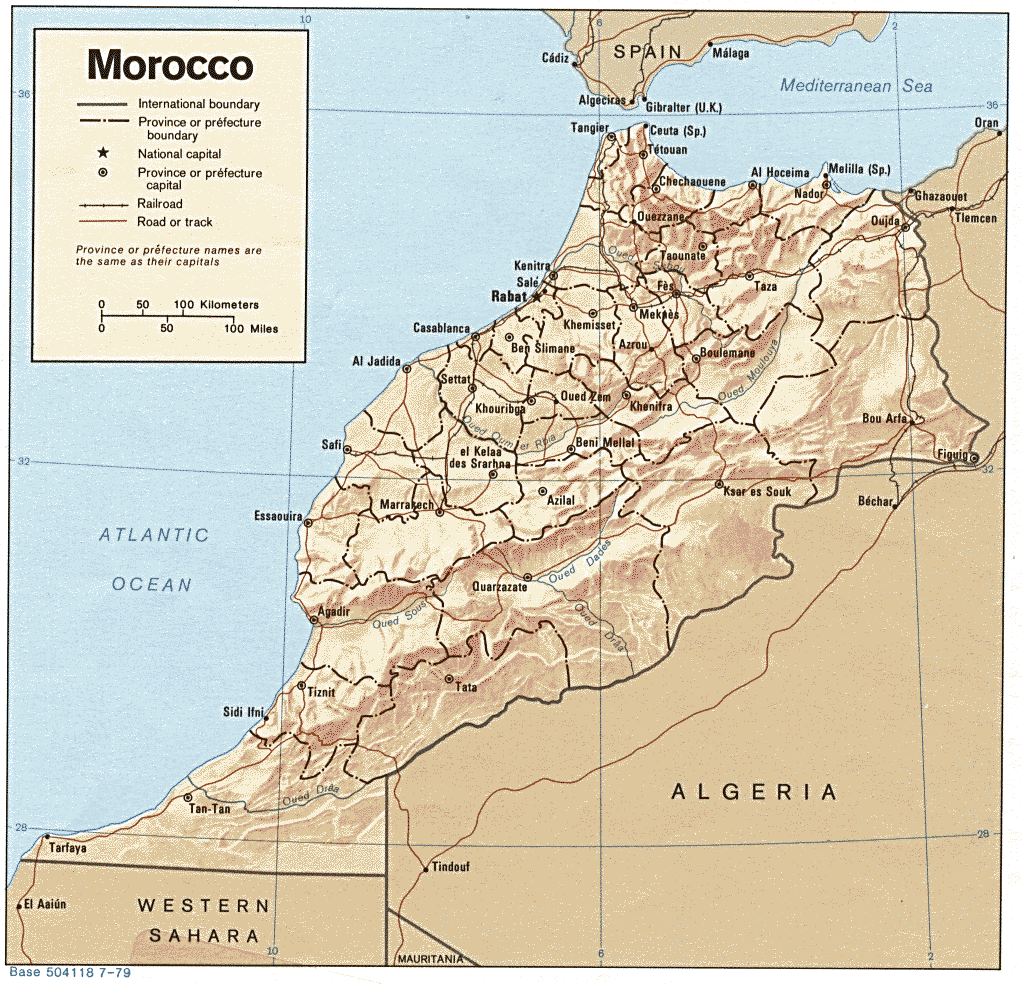
In the late 20th century, Morocco experienced significant political form. 1997 brought forth a bicameral legislature, and King Mohammed VI has introduced several human rights reforms. Currently, the country has a moderately free press, although the government has prosecuted journalists critical of it and of Islam. There is political ambiguity regarding the status of Western Sahara as it pertains to Morocco's borders; in the 1970s Morocco annexed the area but its current status is unresolved. 

The Arab Spring of 2011 influenced Moroccans to take action against the government. In February 2011, thousands gathered in many of the country's biggest cities to protest government corruption and call for greater democracy. Fortunately, the Moroccan government responded fairly proactively to the protesters. Instead of the violence displayed by governments in other countries at the time, the Moroccan government set up a commission in March to draft a new constitution. King Mohammed VI supported a swift implementation of the constitution, and the country held parliamentary elections in November. The Justice and Development party, a moderate Islamist party, now leads the Moroccan government. As of January 2012, the country has a nonpermanent seat on the UN Security Council. 

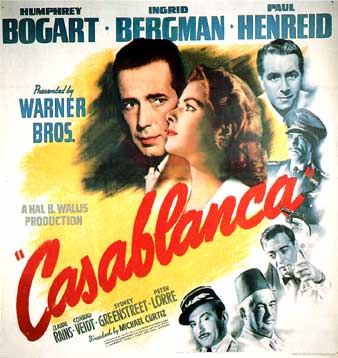
Courtesy of a 1998 trip to Epcot in Walt Disney World, I have always been interested in Morocco. It seemed like a fun, exotic place to travel to and have adventures in. Learning more about the history has given me a more realistic view of the country, but I still find Morocco just as interesting. And who can forget Bogie and Ingrid Bergman in one of the greatest movies of all time, Casablanca? Morocco, I think this is the beginning of a beautiful friendship.